

Protecting Civic Space: How Climate Advocacy is at Risk during UNFCCC Conferences
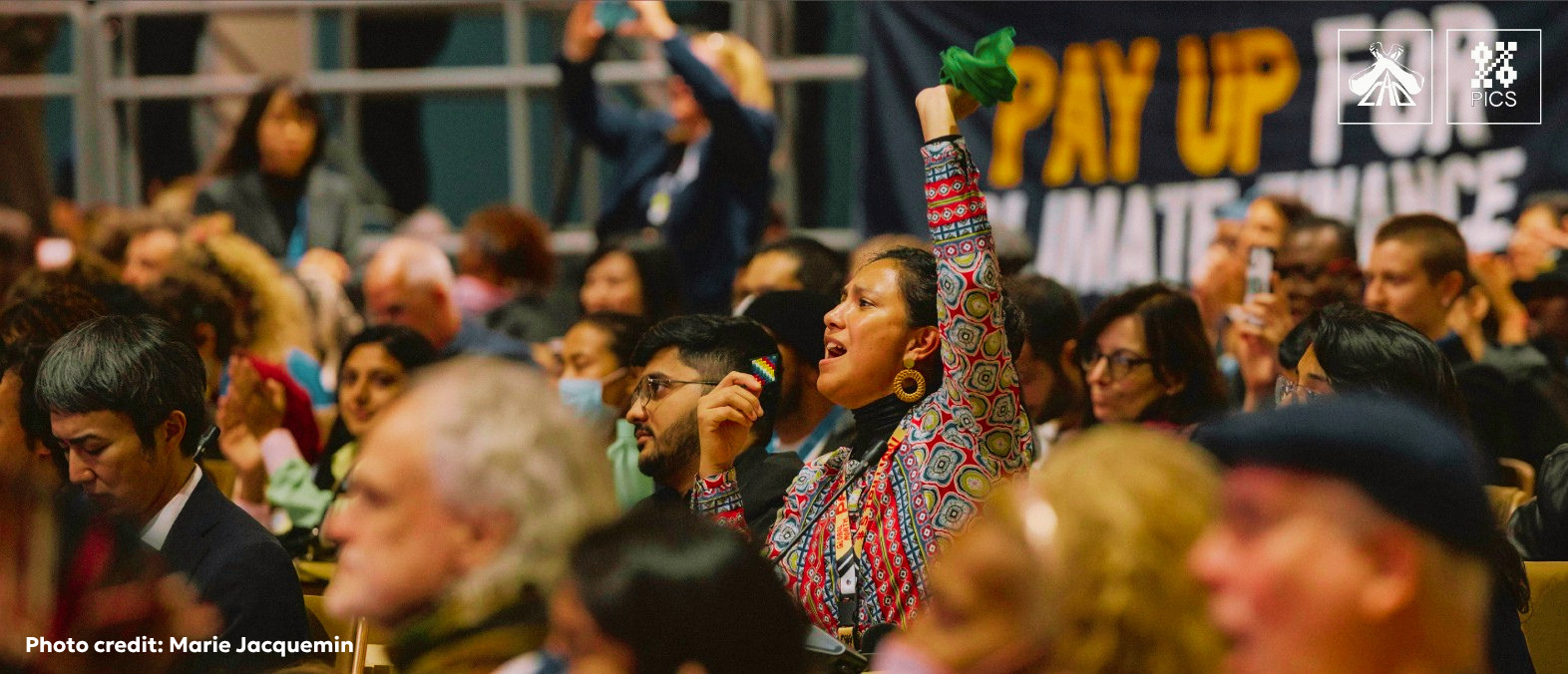
Over four years and five United Nations Framework Convention on Climate Change (UNFCCC) conferences, the Safety Hub – documented 216 cases of climate advocates and environmental defenders facing security incidents, safety breaches, and participation barriers at or around COP (Conference of the Parties) and SB (Subsidiary Bodies meetings) venues: COP27 in Sharm el-Sheikh, COP28 in Dubai, COP29 in Baku, SB62 in Bonn, and COP30 in Belém.
The report finds that the risks documented here are not isolated incidents but reflect systemic governance gaps and institutional failures within the UNFCCC process. These failures not only undermine the protection of civil society participants but in some cases actively place them at risk, despite civil society being widely recognised as crucial to the process itself. Drawing on incident data, practitioner testimony and first-hand accounts from affected activists, the report demonstrates how these failures operate across borders, regardless of the conference location, venue arrangements, security systems, or institutional procedures. 01 Each of the 216 cases is an instance in which civil society had to divert time, resources, and capacity from climate advocacy to crisis response. The cost of operating in an environment that does not protect the people is the loss of strategic and directed advocacy to change the very conditions that have caused climate change.
All case data was collected and analysed under rigorous confidentiality and consent protocols. Identifying details have been anonymised or withheld to protect individuals. This report’s quantitative analysis focuses on the 122 Type A cases. The full 216-case dataset is referenced where it illustrates broader patterns of anticipatory risk, self-censorship, and barriers to participation.

Key Findings:
More than half of the 216 cases (122, or 56%) are confirmed security incidents.
Harassment and intimidation is the most common incident type, recorded at every conference.
Border controls are the single most prevalent mechanism of exclusion, used to determine who can participate before activists ever reach the venue.
UN-system actors (the UNFCCC Secretariat and UNDSS combined) appear in 28% of security incidents –
at a scale comparable to host-state authorities, challenging the assumption that civic-space restrictions come only from host governments.Indigenous peoples, Global South participants, LGBTQIA+ activists, and refugees and stateless persons bear a disproportionate share of the harm.
No independent, participant-centred complaints mechanism exists within the UNFCCC framework.
The report sets out recommendations to the UNFCCC Secretariat, host governments, Parties to the UNFCCC, UNDSS, civil society organisations, and funders.